Who rules
Absolute monarchy
Overview
A hereditary monarch holds supreme power, with no constitution or legislature able to override the royal will.
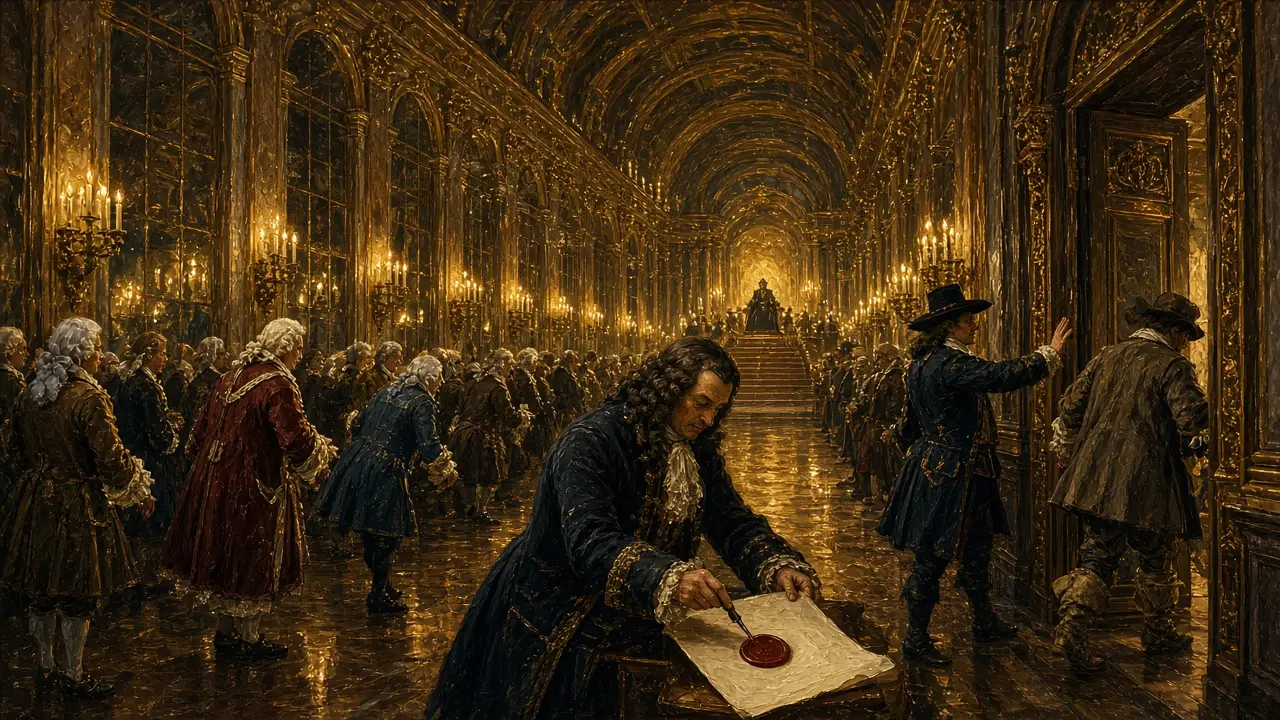
Sovereignty is concentrated in a single hereditary ruler who makes law, appoints officials and commands the army without binding legal limits. In practice kings leaned on nobles, clergy, bureaucrats and custom, but the theory, as proclaimed at the court of Louis XIV, was that the monarch answered to God alone and the royal word was law.
Where it is used
- France under Louis XIV, 1643 to 1715
- The king ruled from Versailles through royal intendants and never summoned the Estates-General, which did not meet between 1614 and 1789.
- Russia, to 1905
- The tsar was autocrat by law, with no elected legislature until the Duma was conceded after the 1905 revolution.
- Saudi Arabia
- The king is head of state and government; the 1992 Basic Law names the Quran and Sunna as the constitution and the Consultative Assembly is appointed.
- Sparta, a contrast
- Two hereditary kings shared power but were checked by five annually elected ephors and a council of elders, showing kingship need not be absolute.
The case for and against
The case for
- A single will can act decisively and override entrenched interests, as Louis XIV did with the nobility.
- A settled rule of inheritance can spare a country a contest for power at every change of ruler.
- Long reigns allow consistent policy over decades.
The case against
- There is no lawful remedy for a cruel, incompetent or insane monarch except rebellion.
- Disputed successions have repeatedly produced civil wars.
- Rule without consent or free information leaves the ruler blind to problems until they explode.
Both columns give the strongest honest case. Which weighs more depends on the place, the time and what the people there want from their government.
Traditions that argued for or about it
Related systems

How the executive is formed
Constitutional monarchy
A hereditary monarch is head of state but governs only within limits set by a constitution and elected ministers.

Who rules
Theocracy
Religious authority is the source of political power, and clergy or religious law govern the state.

Who rules
Oligarchy
Power rests with a small group, whether of birth, wealth or office, who rule largely in their own interest.

Who rules
Military rule
The armed forces hold political power directly, usually after a coup, ruling through officers rather than elected civilians.

How territory is divided
Empire
One ruling centre governs many peoples and territories, usually by conquest, through layers of intermediaries and unequal rules.

Who rules
Personal dictatorship
One ruler holds power in his own person, above party, army and law, and keeps it through loyalty, fear and patronage.
Compare
Cite or share this page
A plain reference you can paste into notes or an essay:
Quest2Order. “Absolute monarchy.” https://quest2order.com/learn/ideas/systems/absolute-monarchy. Accessed 29 November 2026.