
Lesson · 6 min Stretch
The Coup
In one line A coup succeeds when a small armed group moves fast and the rest of the army decides to wait.
The stage's last week asks how political systems fail, starting with the oldest and fastest way. A coup d'état is the seizure of the state by a small armed group, usually from inside it. Who Enforces? showed that every order rests on people willing to enforce it, and a coup is a bet about those people. In Coup d'État: A Practical Handbook (1968), Edward Luttwak set out the method coolly: a coup does not defeat the state, it captures a small but vital part of the machine and uses it to command the rest.
Three things decide the outcome. Speed: the palace, headquarters, radio station and key leaders must be taken within hours. Confusion: loyal units should not know who is in charge. Above all, waiting: the rest of the army, the police and the civil service must obey whoever seems to hold the centre. When they refuse, a coup collapses, as one did in Moscow in August 1991 within days, after crowds surrounded the Russian parliament and units declined to storm it.
Coups cluster. Turkey's army intervened in 1960 and 1971. By 1980 fighting between militants of left and right was killing thousands, and parliament had failed for six months to elect a president. On 12 September General Kenan Evren took power, closed parliament, banned every party and detained hundreds of thousands. Thailand's army has seized power again and again since 1932, in 1947, 1957, 1971, 1976 and 1991 among others, and more than once since. Political scientists call this the coup trap: each coup makes the next one thinkable.
Coups fell sharply after 1990, as the Cold War's end removed foreign patrons and donors began to shun coup governments. What makes a government coup-proof? Rulers have used rival guards, loyal kinsmen and spies watching the officers, which protects the ruler and weakens the army. The democratic answer is harder: professional officers, and a government legitimate enough that the rest of the army will not wait.
Marches on the radio
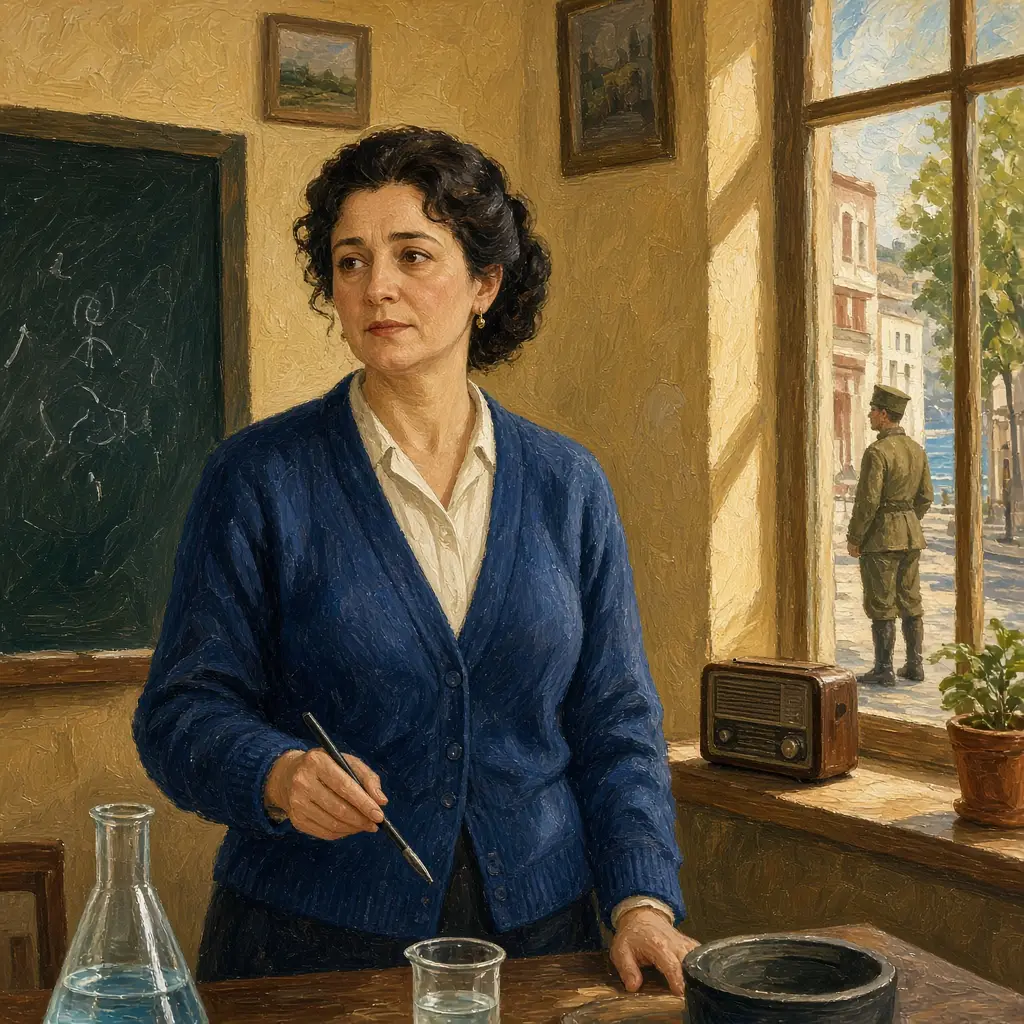
Zeynep taught chemistry at a lycée in İzmir. Before dawn on 12 September 1980 her neighbour knocked to say the radio was playing military marches, and soon an officer read a statement: the armed forces had taken over the government to save the state. A curfew was in force. By afternoon soldiers stood on the corners where, the week before, two students had been shot in a fight between rival groups.
Her neighbour, a grocer, was relieved; for two years he had closed early for fear of gunmen. Zeynep was less sure. Her teachers' union was shut by order that week, and a colleague who had marched with it stopped coming to work. Nobody she knew resisted, and no other unit moved against the generals. They had needed a few hours, a radio station and the certainty that everyone else would obey. On Monday she taught the lesson she had planned.
Try this today Find out who can give orders to your country's army, and ask what would stop one unit from acting on its own.
Cite or share this lesson
A plain reference you can paste into notes or an essay:
Quest2Order. “The Coup.” https://quest2order.com/learn/lesson/anatomy-of-a-coup. Accessed 29 November 2026.
Sources
- Coup d'État: A Practical Handbook — Luttwak's book of 1968: seizing a small part of the state to control the rest, speed, and neutralising loyal forces.
- 1980 Turkish coup d'état — The background of street violence and a deadlocked parliament, and what the generals did after 12 September 1980.
- Coup-proofing — Rulers' methods against coups, the coup trap, and the fall in coup attempts after the Cold War.