
Lesson · 6 min Stretch
Go to the Meeting
In one line Most public decisions are made in rooms with empty chairs, and sitting in one is a first act of citizenship.
Councils must usually meet in public, the agenda and staff reports tell you where a decision is heading, and few residents ever take the empty seats. The lesson The Public Meeting showed all three. Last week's lesson, Motion, Amendment, Vote, added the machinery of chair, motion, amendment and minutes. Today you go and watch it work.
Choose a body that decides something you care about. It might be a city or district council, a school board, an English parish council, or a ward committee in an Indian city. In most small Swiss communes the residents' assembly itself is the legislature, and in an Indian village the gram sabha gathers the adult voters. Many bodies now stream their meetings, and watching online counts. Read the agenda a day ahead and pick one item to follow from start to finish.
In the room, watch three things. Who speaks: officials, councillors, the same two residents as every month, or a stranger like you? Who decides: is the vote real, or was it settled earlier, in a committee or a corridor? And what never comes up. Setting the Agenda showed that the quietest power decides what reaches the table at all. A problem everyone in town talks about that appears on no agenda is worth writing down.
Count the empty chairs as well. Most public decisions are made in rooms where the public could sit and does not. Sitting in one will not change tonight's vote. It changes who the councillors see in front of them, and it teaches you the room before the day you need to speak in it.
Item seven
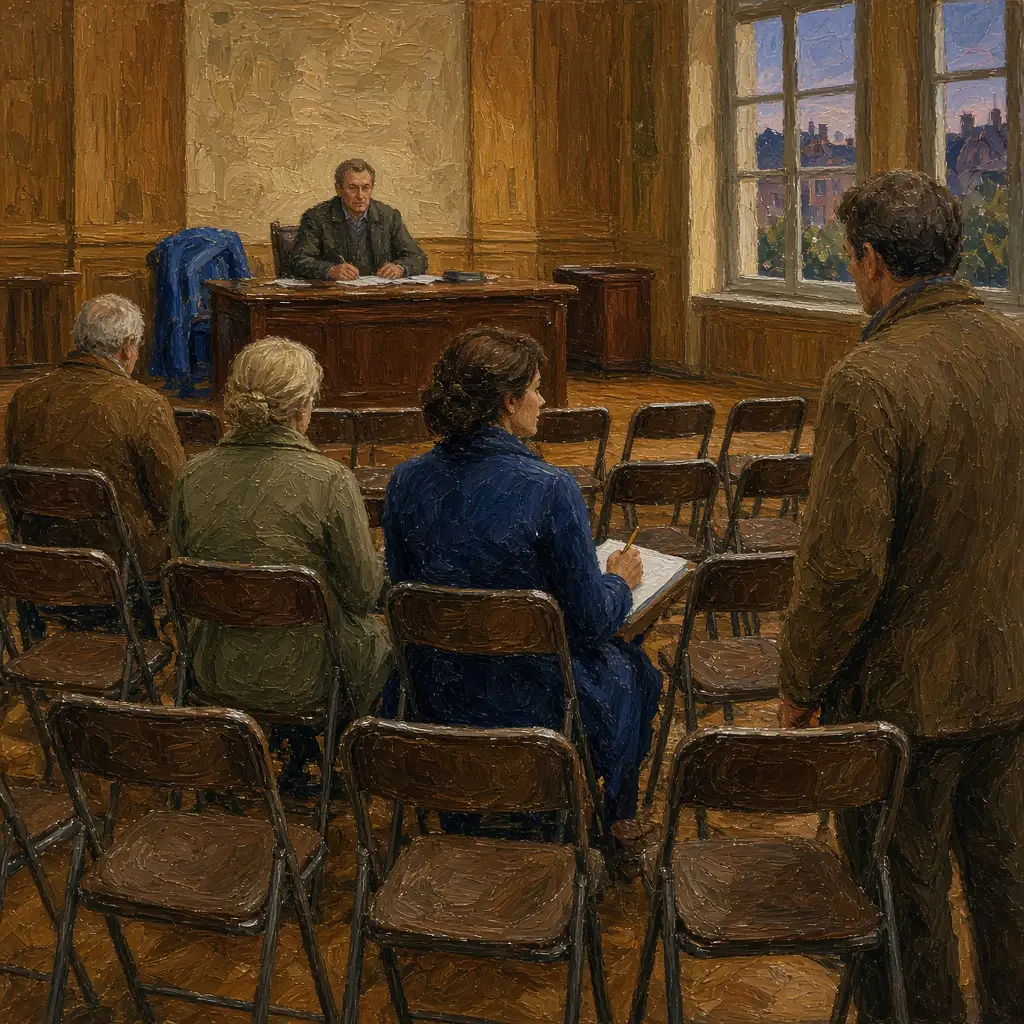
Aurélie had lived in a village near Lyon for six years and had never been to a meeting of its municipal council, which met in the town hall on the first Monday of each month. This time she downloaded the agenda. There were nine items, and the seventh was the sale of the old schoolyard. She went, took one of twenty folding chairs, and found she was one of three residents there.
The mayor read out each item. Most passed in a minute without debate; the schoolyard took two. Aurélie noticed that nobody mentioned the closing of the bus route that every family on her street complained about. It was on no agenda she could find. She wrote it on the back of her copy under the heading never came up. When the meeting ended, a councillor she had never met came over to ask who she was and why she had come.
Try this today Find one public meeting in the next month, download its agenda, and mark the one item you most want to watch being decided.
Cite or share this lesson
A plain reference you can paste into notes or an essay:
Quest2Order. “Go to the Meeting.” https://quest2order.com/learn/lesson/attend-a-public-meeting. Accessed 29 November 2026.
Sources
- Town meeting — Wikipedia on direct assemblies of residents, including Swiss communal assemblies and Spain's open councils.
- Gram sabha — Wikipedia on the village assembly of adult voters in India's panchayat system.