
Lesson · 6 min Gentle
Career, Volunteer or Both?
In one line Who staffs a fire engine depends on how busy the area is and what it can afford, and each model trades something away.
Who rides the fire engine says a lot about a place. Germany has about a million volunteer firefighters; cities above roughly 100,000 people must keep a professional brigade, and almost everywhere else relies on volunteers. About two thirds of fire departments in the United States are run wholly by volunteers; the big cities where most people live have career crews. Most of France's firefighters are volunteers too, yet Paris is protected by a brigade of the French Army and Marseille by a battalion of the French Navy. Japan pairs career city departments with its volunteer corps, and rural Britain uses on-call firefighters who keep other jobs and are paid for each call.
The pattern follows density and money. Keeping one seat on an engine filled day and night takes four or five paid firefighters working shifts, so a career crew of four means about twenty salaries. A city station answering a dozen calls a day earns that cost. A village station answering a few calls a month does not, and the village pays in time instead: volunteers must first travel from home or work to the station, so the engine leaves several minutes later.
Each model has a real case. Volunteers are cheap for taxpayers, live among the people they protect, and can bring many hands to a big fire, as Who Runs Into the Fire showed. Career crews roll out within a minute or two, train each week, and see enough fires to stay sharp. Paris's military brigade dates from a fire at the Austrian embassy in 1810, and Marseille's naval battalion from a department store fire in 1938: both cities chose discipline and a single chain of command after their civilian firefighters failed.
So most countries mix: career crews where calls are many, volunteers or on-call crews where they are few. The hard question is who decides how many extra minutes of waiting a village should accept.
Three on the engine
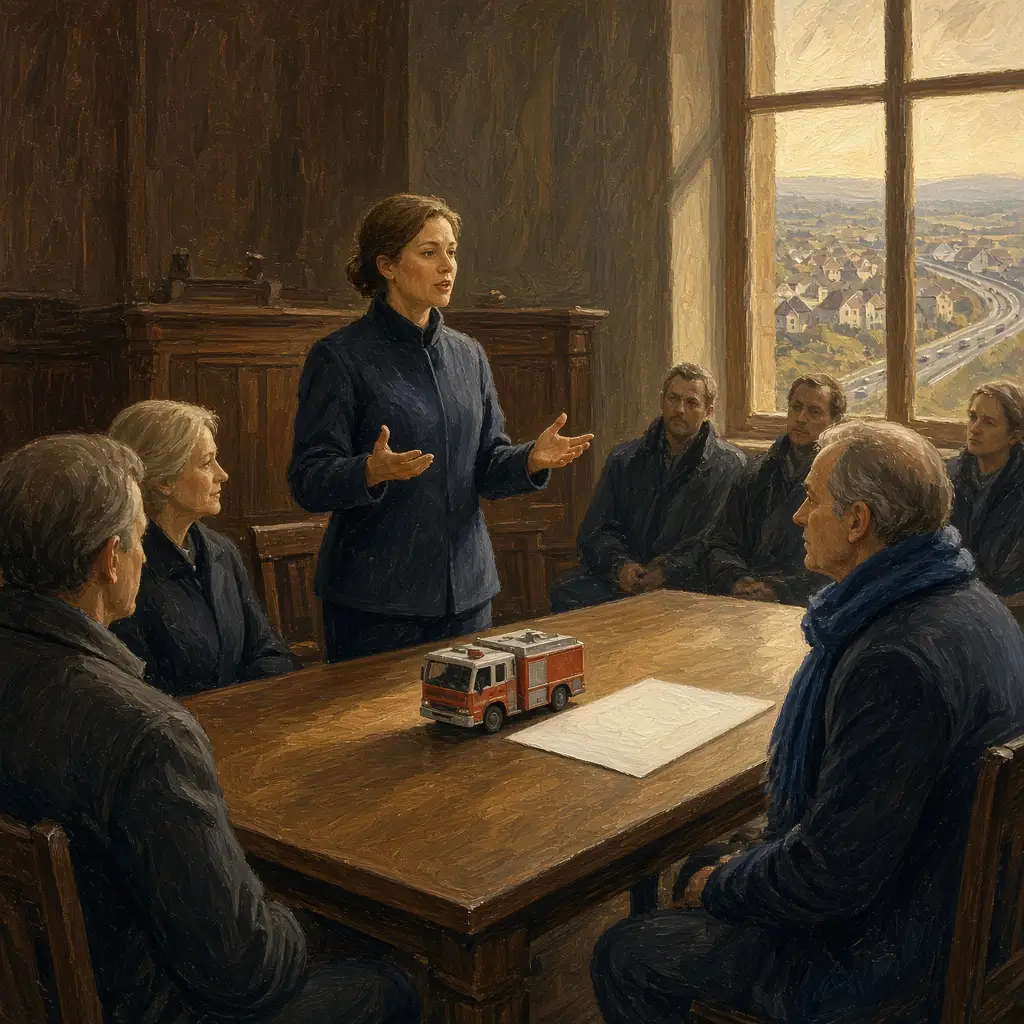
Monika commands the volunteer brigade of a fast-growing town near Munich. Twenty years ago it answered about two hundred calls a year. Now new estates, a business park and a stretch of motorway bring well over a thousand, many on weekday mornings, when most of her volunteers are at work in the city. Twice last month the first engine left the station with only three people aboard.
At the council meeting she sets out the choice. The town could hire eight full-time firefighters to cover weekday daytime, keeping volunteers for nights, weekends and big fires. It would cost about as much each year as a new school roof. A councillor asks whether paid staff will make the volunteers drift away. Monika says some might, but a crew of three on a motorway crash is the greater danger. The council votes for the mixed plan, and the volunteers' association asks to help choose the new staff.
Try this today Look at the nearest fire station as you pass: are cars in the yard during the day, and what does that tell you about who crews it?
The machinery, step by step: How a fire service is organised →
Cite or share this lesson
A plain reference you can paste into notes or an essay:
Quest2Order. “Career, Volunteer or Both?.” https://quest2order.com/learn/lesson/career-volunteer-or-both. Accessed 29 November 2026.
Sources
- Paris Fire Brigade — The French Army unit that protects Paris, created after the embassy fire of 1810.
- Marseille Naval Fire Battalion — The French Navy unit formed after the department store fire of 1938.
- Fire services in Germany — Volunteer brigades and the professional brigades of large cities.