
Lesson · 6 min Stretch
Chile 1973
In one line Chile's democracy fell when polarisation, a deadlocked presidency and a vanishing centre came together.
Chile had held competitive elections since 1932. Its fall supplied the warning about rival mandates in The Perils of Presidentialism and the warning about camps in Sorting Into Camps; here the case itself is the subject. In 1970 the socialist Salvador Allende, of the Popular Unity coalition, won 36.6 percent in a three-way race, and Congress confirmed him after he signed a statute of guarantees demanded by the Christian Democratic deputies.
In The Breakdown of Democratic Regimes: Chile (1978), part of a series edited by Linz and Alfred Stepan, the political scientist Arturo Valenzuela argued that economics and foreign pressure do not explain the fall alone. The decisive change was the collapse of the centre: the Christian Democratic camp, long the hinge between left and right, moved into alliance with the right. In March 1973 Popular Unity won about 43 percent, too little to govern and enough to block impeachment. Inflation passed 600 percent, and talks between Allende and Christian Democratic leaders that winter failed. On 11 September the armed forces attacked the presidential palace, Allende died inside, and military rule lasted until 1990.
From Popular Unity's side, the strongest reading is this. An elected government pursued its programme by legal means; Congress voted unanimously to nationalise copper in 1971. It faced owners' strikes, an American government that funded its opponents, and officers who broke their oath. Democracy was destroyed by those who would not accept losing.
From its opponents' side, the strongest reading differs. A president chosen by about a third of voters pushed an irreversible change most had not chosen, took over firms through loopholes in an old decree, tolerated seizures of land and factories, and ignored court rulings, until the Supreme Court and the Chamber said the constitution was being broken. Democracy, on this view, was failing before the coup. Valenzuela's point is that both readings describe real events, and that nobody was left in the middle to make a deal.
Go deeper
Linz's own volume in the same series offered a term Chile helps explain: the semi-loyal opposition. A loyal party rejects violence and refuses alliances with those who use it. A semi-loyal one accepts the system only on conditions, excuses lawbreaking by its own side and talks to plotters while denouncing them. Linz argued that breakdowns usually need semi-loyalty on more than one side. Chile in 1973 had groups on the far left who spoke of armed revolution and groups on the right who courted the army, and the room for loyal politics shrank between them.
Bread and looms
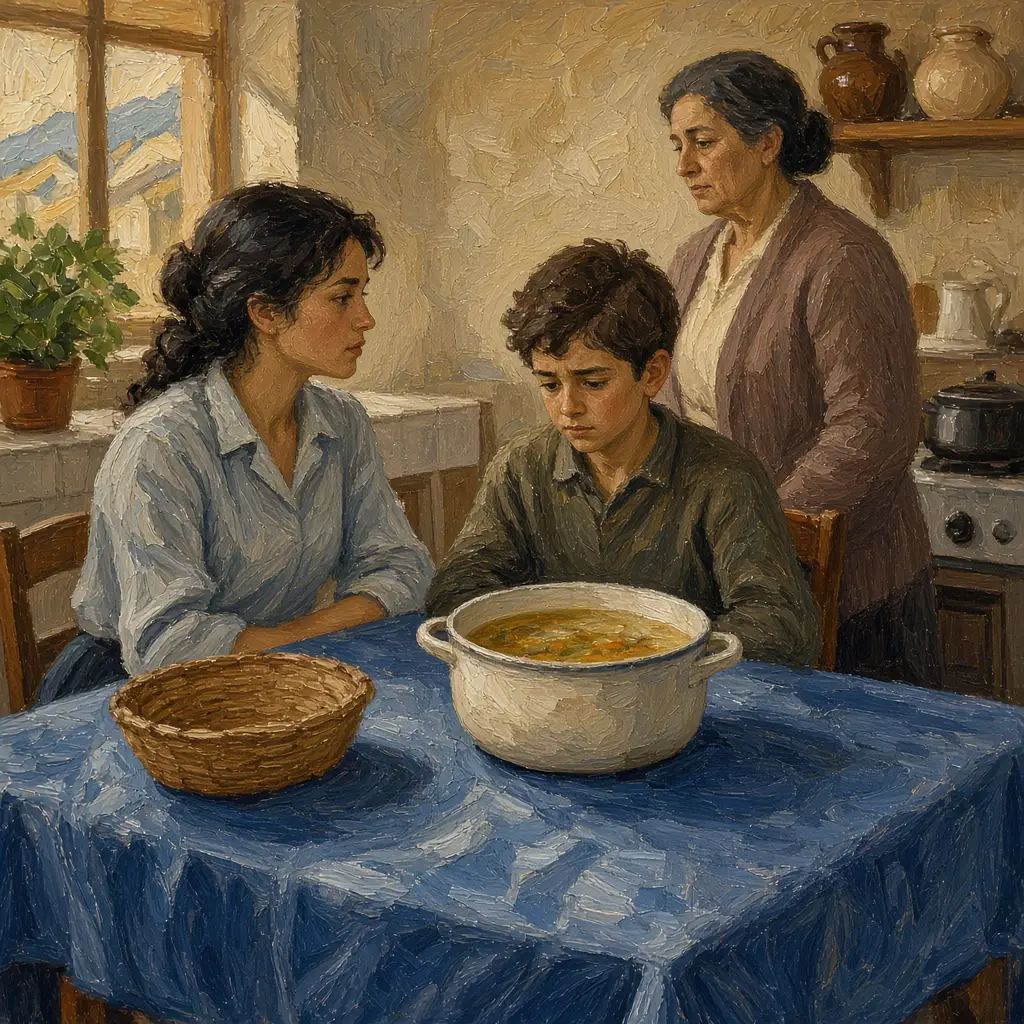
Pilar was a nurse at the regional hospital in Concepción. In August 1973 the doctors' association struck against the government, saying it had broken the constitution, and her ward sister joined them. Pilar's brother Cristóbal worked at a textile mill near the city that the government had taken over the year before, and he was helping the workers' committee keep the looms running without spare parts.
On Sunday the bread their mother had queued two hours for ran out before the soup. Cristóbal said the shortages were made by hoarders and the strike was a plot against an elected president. Pilar said the queues were real, and so were the court orders the government ignored. Neither moved the other. She went back to the ward next morning, covered the shifts of the strikers and signed neither side's petition. Three weeks later soldiers settled the argument for both of them.
Try this today Ask someone who remembers a bitter national quarrel what each side feared the other was about to do.
Cite or share this lesson
A plain reference you can paste into notes or an essay:
Quest2Order. “Chile 1973.” https://quest2order.com/learn/lesson/chile-1973-case. Accessed 29 November 2026.
Sources
- 1973 Chilean coup d'état — The 1970 result, the truckers' strike, inflation, the failed tank revolt of June 1973 and the Chamber's resolution.
- Salvador Allende — His government's programme, nationalisations and land reform, its critics, and his death at La Moneda.
- Arturo Valenzuela — The Chilean-born political scientist and his book The Breakdown of Democratic Regimes: Chile (1978).