Lesson · 6 min Stretch
Collective Security
In one line Collective security promises that all will answer an attack on one, but the UN acts only when its great powers allow.
An alliance protects friends against a named enemy. Collective security promises more: an attack on any member is answered by all, so no aggressor can win. The League of Nations wrote that promise into its Covenant in 1919. In October 1935 Italy invaded Abyssinia, now Ethiopia, a fellow member. Within days the League named Italy the aggressor and voted sanctions, but it left out oil, and Britain kept the Suez Canal open to Italian ships. In June 1936 the Emperor Haile Selassie appealed to the League in Geneva; within weeks the sanctions were lifted.
The United Nations was built in 1945 to avoid that failure. Under Chapter VII of its Charter the Security Council can name a threat to peace and order sanctions or force, and the great powers of 1945, China, France, the Soviet Union, Britain and the United States, sit on it permanently with a veto. When North Korea invaded the South in June 1950, the Council called on members to help repel the attack under a unified command led by the United States. It could act only because the Soviet delegate was boycotting the Council over who should hold China's seat. Rwanda in 1994 showed the other face. As genocide began, the Council cut its mission there from about 2,500 troops to 270, and some 800,000 people were killed in about a hundred days.
The veto is both the system's flaw and its condition. The Council cannot act against a permanent member or its close friends. Yet the League had shown what happens when great powers walk out; the veto keeps them inside.
Defenders say the UN has sent peacekeepers from the Suez frontier to Cyprus and authorised the reversal of Iraq's seizure of Kuwait in 1990. Critics answer that it acts only when the powerful already agree, ratifying their wishes and standing aside, as over Rwanda, when they do not care.
A volunteer for Korea

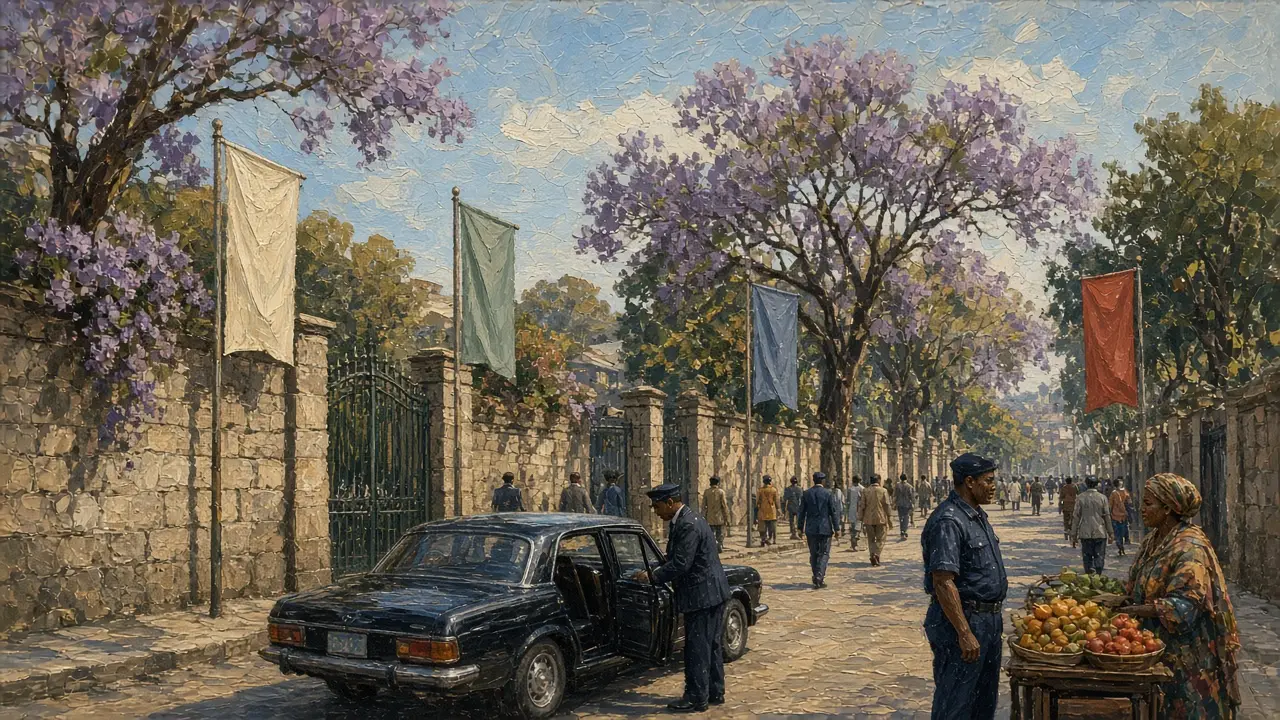
In the spring of 1951 Tesfaye, a young officer of the Imperial Bodyguard in Addis Ababa, puts his name down for the battalion his Emperor is sending to Korea. His father, who fought the Italians in 1936 and watched the League do nothing that mattered, thinks he has lost his mind. Why, he asks over dinner, should an Ethiopian die on a peninsula he could not find on a map, for the same great powers who left us to the gas?
Tesfaye has an answer ready. The Emperor stood in Geneva and warned that what was done to Ethiopia would be done to others, he says. If small countries only want collective security when they are the victims, it will never exist for anyone. His father does not reply. A month later he comes to the station with a parcel of bread and his own old rifle sling, and says nothing more about the League.
Try this today Read Article 39 of the UN Charter and list what the Security Council must decide before it can order sanctions or force.
Cite or share this lesson
A plain reference you can paste into notes or an essay:
Quest2Order. “Collective Security.” https://quest2order.com/learn/lesson/collective-security-un-limits. Accessed 29 November 2026.
Sources
- Abyssinia Crisis — The Italian invasion of 1935, the League's limited sanctions and Haile Selassie's appeal.
- United Nations Security Council Resolution 84 — The 1950 resolution on Korea, passed during the Soviet boycott.
- UN Charter, Chapter VII — The official text of the Security Council's powers over threats to the peace.