
Lesson · 6 min Steady
Fanon on Decolonisation
In one line Fanon held that colonial rule was itself violence, and warned that new elites might betray independence.
Frantz Fanon was born in Martinique in 1925, fought for Free France in the Second World War and trained as a psychiatrist in Lyon. In 1953 he took charge of a ward at the psychiatric hospital in Blida, Algeria. The Algerian war of independence began the next year, and he found himself treating both tortured Algerians and French policemen troubled by the torture they had done. He resigned in 1956 and joined the National Liberation Front, the FLN.
The Wretched of the Earth, finished as he was dying of leukaemia in 1961, starts from a claim about colonialism itself. The colonial world, he wrote, was a world cut in two, held together by soldiers and police; its order had been violence from the start, and it would not be argued out of existence. For Fanon the colonised person's revolt was also a release from the inferiority colonial rule had taught. This is a direct challenge to Gandhi's Swaraj: where Gandhi held that means shape ends, Fanon held that the coloniser's force had already set the terms.
His second argument is often forgotten. In a chapter on the pitfalls of national consciousness, he warned that the educated middle class who inherit power at independence may simply step into the colonisers' places: one party, a leader worshipped as the nation, wealth flowing to a new elite and the countryside forgotten. Only a people who took part in governing, he said, would make independence real.
The case against his defence of violence is serious. Hannah Arendt argued that violence can destroy power but never create it, and that rule won by violence tends to stay violent. The FLN itself killed civilians and rival nationalists, and independent Algeria became a one-party state, much as his own warning foresaw. Studies of twentieth-century resistance campaigns have found that non-violent ones succeeded more often. His defenders reply that France did not leave Algeria because of petitions.
Go deeper
Fanon's first book, Black Skin, White Masks (1952), studied how colonised people come to see themselves through the coloniser's language and gaze, a theme close to Du Bois's double consciousness. Jean-Paul Sartre's preface to The Wretched of the Earth praised violence in starker terms than Fanon himself, and many readers have met Fanon through Sartre. Some scholars think the preface narrowed the book, and point to its closing chapters of psychiatric cases from the war, torturers as well as victims, as the work of a doctor counting the cost of violence on every side.
The villas on the hill
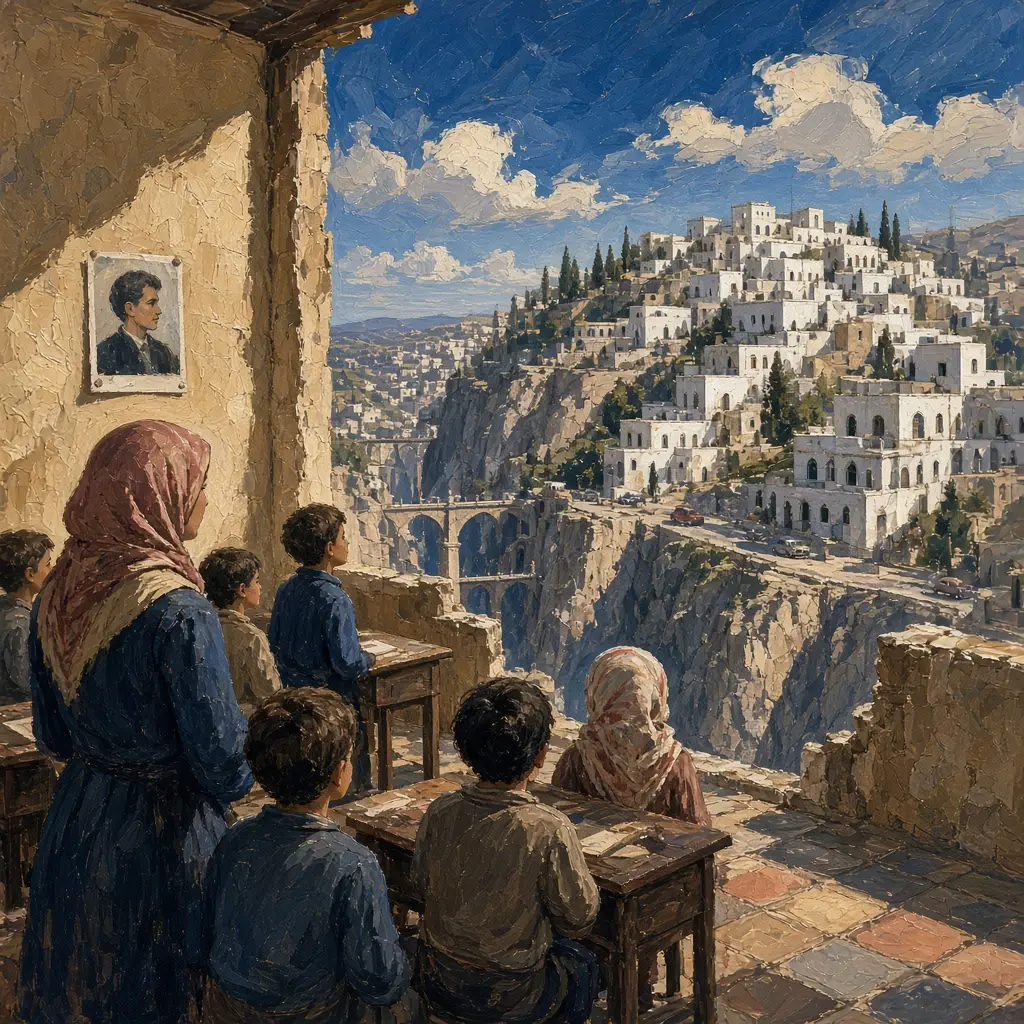
Yamina was a schoolteacher in Constantine when independence came in July 1962. She danced in the street with her pupils' mothers. Her elder brother had died in the mountains four years before, and she kept his photograph on the classroom wall. That autumn, families of departing settlers left whole streets of villas empty on the hill above the town.
By the next spring the villas were full again, of new officials and their relatives. Yamina's school still had no roof on its second wing, and the teachers' pay was months late. When she raised it at a party meeting, a man she had known as a clerk in the colonial prefecture told her to be patient and grateful. She went home and took down a battered copy of Fanon's book, and reread the chapter about the middle class.
Try this today Look up when a former colony near you became independent, and who held power there ten years later.
Cite or share this lesson
A plain reference you can paste into notes or an essay:
Quest2Order. “Fanon on Decolonisation.” https://quest2order.com/learn/lesson/fanon-wretched-of-the-earth. Accessed 29 November 2026.
Sources
- Frantz Fanon — Stanford Encyclopedia of Philosophy on his life, Blida, the FLN and The Wretched of the Earth.
- The Wretched of the Earth — The 1961 book, Sartre's preface and later criticism.