
Lesson · 6 min Stretch
Two Hats or One?
In one line The person who stands for a state and the person who runs it may be one person, or two very different ones.
Every state needs two jobs done. Someone must stand for the country as a whole: receive ambassadors, sign laws, open parliament. Someone must run it: draw up the budget, choose ministers, answer for what goes wrong. The first is the head of state, the second the head of government. State, Nation, Government called the government whoever runs the state's machine at the moment; the question now is who sits at the top of it.
Some countries give both hats to one person. The presidents of the United States, Brazil and Mexico lead the state and the government at once. Others split them. Britain, Japan, Sweden and Spain keep a hereditary monarch as head of state while a prime minister governs. Germany and India do the same with a president chosen by a special assembly, and Ireland elects its president directly yet gives the office few powers. Titles mislead: a president can be the strongest person in the land, or mostly a ceremonial figure.
In 1867 the English journalist Walter Bagehot offered an explanation in The English Constitution. Government, he wrote, has dignified parts, which win the reverence of the people, and efficient parts, which actually work and rule. The crown gave the British state its dignity; the cabinet did the governing. The monarch kept 'the right to be consulted, the right to encourage, the right to warn', and little more.
Whether the split is wise is still argued. Defenders say a head of state above party gives every citizen a figure to respect, and a referee if government breaks down. Critics say ceremony is costly, a hereditary office sits badly with equality, and vague reserve powers could be misused in a crisis. Belgium tested the line in 1990, when King Baudouin refused on grounds of conscience to sign a law on abortion and was declared unable to reign for about a day while his ministers signed it.
Two hats on the board
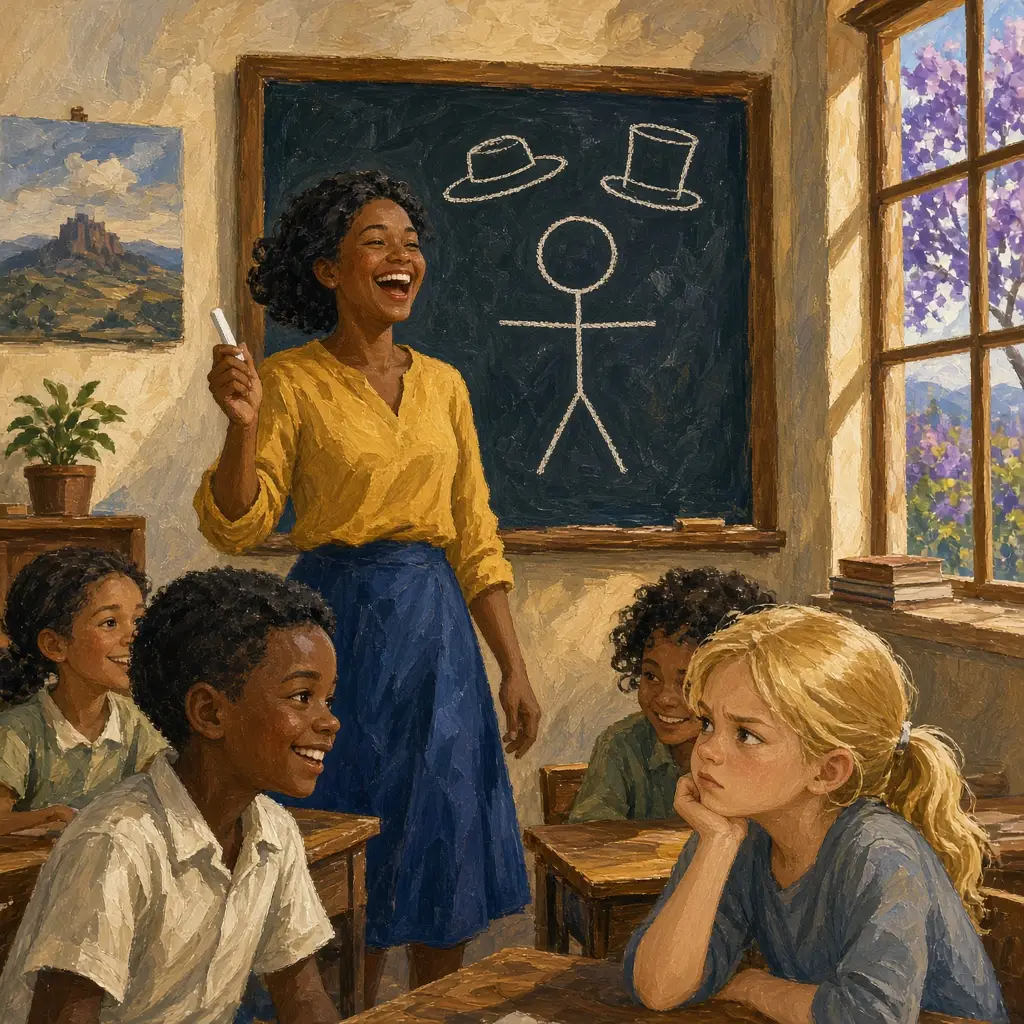
Palesa teaches civics at a secondary school in Pretoria. One morning an exchange pupil from Norway, Sigrid, asked a question the class could not answer at once. In Norway, she said, the king opens parliament and the prime minister runs the country. Who does the opening here, and who does the running?
Palesa drew two hats on the board, one marked symbol and one marked government, and put them both over a single stick figure. South Africa's president, she explained, wears both. Yet voters do not elect the president directly, as in Brazil. After each election the National Assembly chooses one, and the Assembly can remove the president by a vote of no confidence. Sigrid frowned. 'So it is a prime minister with a crown?' Palesa laughed and said that was not a bad way to put it, though the constitution would never use the word crown.
Try this today Find out who signs your country's laws and who decides what goes into them. Are they the same person?
Cite or share this lesson
A plain reference you can paste into notes or an essay:
Quest2Order. “Two Hats or One?.” https://quest2order.com/learn/lesson/head-of-state-head-of-government. Accessed 29 November 2026.
Sources
- The English Constitution — Bagehot's book of 1867, its dignified and efficient parts and the monarch's three rights.
- Head of state — How countries combine or divide the roles of head of state and head of government.
- Baudouin of Belgium — The king's refusal to sign the abortion law of 1990 and how the government resolved it.