Lesson · 6 min Steady
The Mandate of Heaven
In one line For Mencius, a ruler who lets the people starve has lost Heaven's mandate and may rightly be removed.
The Zhou kings, who overthrew the Shang dynasty around three thousand years ago, explained their victory with an idea that would outlive them: Heaven grants the right to rule to a virtuous house and takes it from a cruel one. The Right to Rule met this Mandate of Heaven as one ground of legitimacy. In the fourth century BCE Mencius, the most famous follower of Confucius, turned it into a sharp test of rulers.
Mencius taught that the people matter most, the altars of the land and grain come next, and the ruler matters least. He told King Hui of Liang that a king whose dogs and pigs eat the people's food while men die of hunger on the roads, and who then blames the harvest, is like a man who stabs someone and blames the knife. Heaven, he argued, does not speak. It shows its will through the people, as an old saying put it: Heaven sees as the people see and hears as the people hear.
From this came his boldest answer. King Xuan of Qi asked whether a subject might rightly kill his king, as the founder of the Zhou had done to the last, cruel Shang king. Mencius replied that a man who wrecks humaneness and rightness is a mere fellow. He had heard of a fellow being punished, he said, but not of a ruler being murdered.
Some two thousand years later, John Locke argued in Locke's Trust that a government which betrays its trust may be resisted. The likeness is real, and so is a difference. Mencius gave the people no vote and no procedure; the mandate was read from famine, revolt and success. That makes it hard to apply until after the fact, when whoever wins can claim Heaven was on his side.
Go deeper
Mencius was honoured but also feared. The first Ming emperor, Zhu Yuanzhang, is reported to have been so angered by passages putting the people above the ruler that he had Mencius's tablet removed from the Confucian temple for a time, and later ordered an edition with dozens of passages cut. The full text came back, and from the fourteenth century until 1905 the Mencius was one of the Four Books that every examination candidate learned by heart. A book that told rulers they could be removed was memorised by the officials who served them.
The granary key

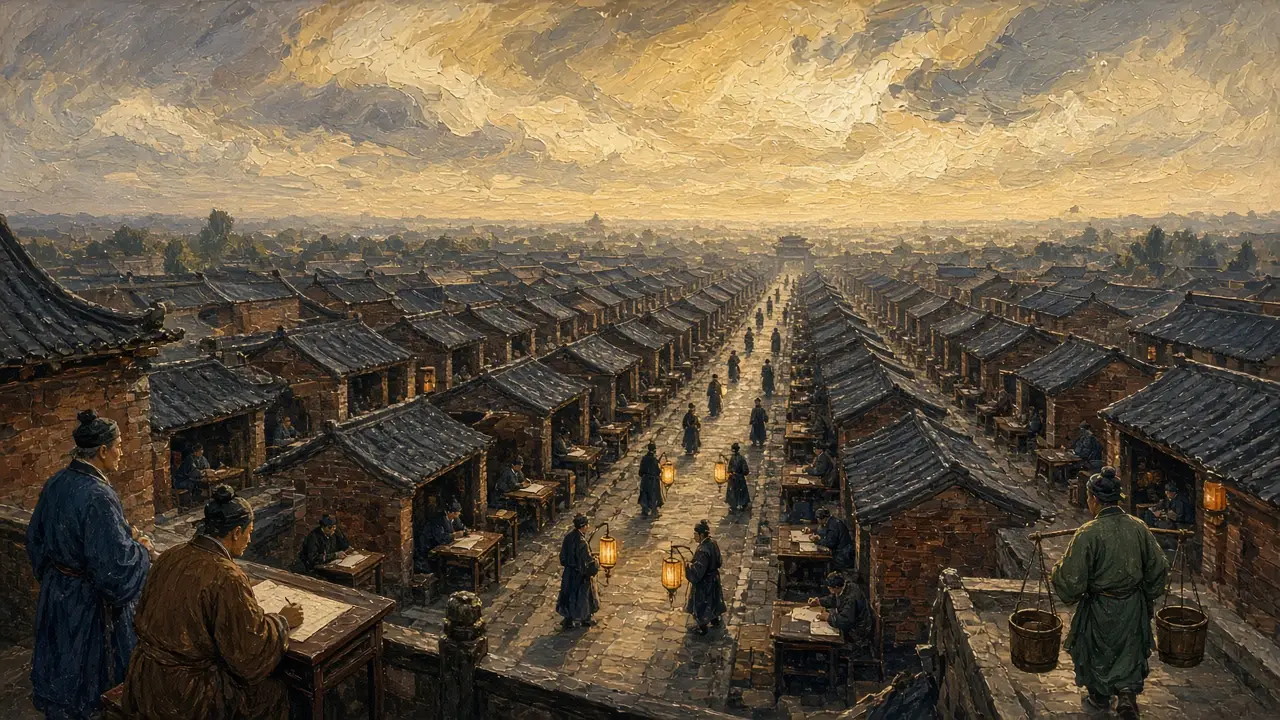
In a drought year centuries ago, Wen, the magistrate of a county in Henan, held the key to the county granary and an order from the capital to send the full grain tax north. Outside his gate, families from the villages were boiling bark. His clerk reminded him that magistrates who missed their quota were dismissed, or worse.
Wen sat up that night with his copy of Mencius open at the conversation with King Hui. In the morning he opened the granary, sent half the tax with a report of the drought, and wrote a memorial to his superiors. A ruler's mandate, he wrote, was kept or lost in counties like his, and he would rather answer for a short quota than for empty villages. He did not know whether the memorial would save his post. He knew which failure he could explain.
Try this today Pick a leader in the news and ask what Mencius would look at first: the leader's titles, or the condition of the people.
Cite or share this lesson
A plain reference you can paste into notes or an essay:
Quest2Order. “The Mandate of Heaven.” https://quest2order.com/learn/lesson/mencius-mandate-of-heaven. Accessed 29 November 2026.
Sources
- Mencius (Stanford Encyclopedia of Philosophy) — His view of human nature, government for the people and the removal of tyrants.
- Mandate of Heaven — The Zhou idea of Heaven's grant and withdrawal of the right to rule, and its later history.