
Lesson · 6 min Steady
Paine's Rights of Man
In one line Paine argued that each generation may remake its government by reason, and that rule by inheritance is absurd.
Thomas Paine took Locke's argument and wrote it for everyone. Locke had made the people judges of a ruler who betrays their trust, as Locke's Right to Resist showed; Paine pushed it further. The son of an English corset-maker and a former excise officer, he sailed to America in 1774 and helped drive the colonies to independence with Common Sense in 1776. When Edmund Burke attacked the French Revolution, Paine answered with Rights of Man, its first part published in March 1791 and its second in February 1792.
His first claim is about time. Every age and generation, he wrote, must be as free to act for itself as the ones before it. The dead have no authority over the living, so a settlement made in 1688 cannot bind people born a century later. Government is not an estate handed down in a family. It is a trust held by the living, who may rewrite its terms.
From this follows his attack on inheritance. Wisdom is not passed on in the blood, so a hereditary lawmaker, he jeered, makes as much sense as a hereditary mathematician or a hereditary poet. Paine wanted constitutions written down and adopted by the people, and in the second part he went further, proposing pensions for the old and payments to help poor parents school their children, funded by a graduated tax on large estates. Liberty, for him, meant rebuilding institutions by reason, not patching them.
Just as radical was the way he wrote: plain words, cheap editions, copies read aloud in taverns and workshops and sold, by most estimates, in the hundreds of thousands. The government took fright. Paine was tried for seditious libel in 1792 while he was in France, and convicted in his absence. To admirers he gave ordinary people a language of rights; to critics, as the next lesson shows, he treated a nation as a blank page.
Reading by candlelight
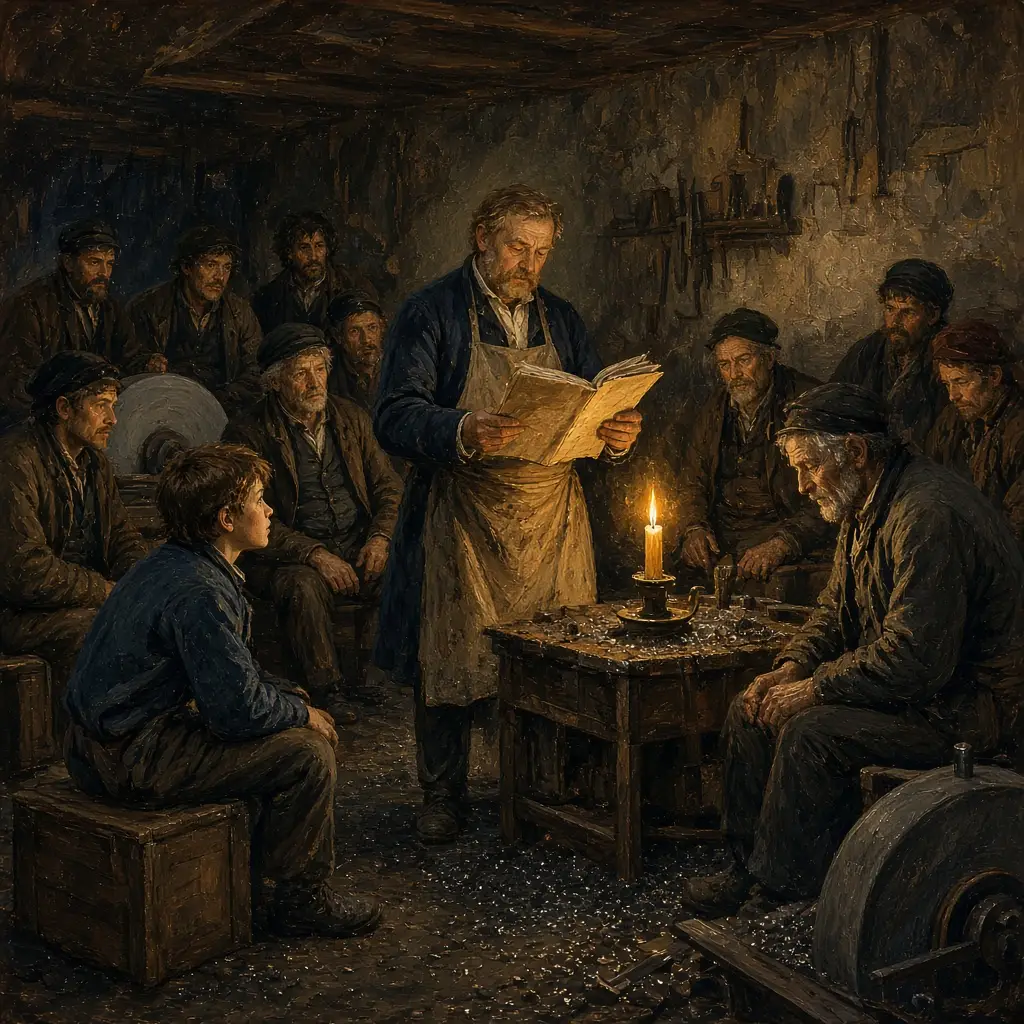
In the spring of 1792 Samuel, a cutler's apprentice in Sheffield who could barely read, sat on an upturned crate while his master read Rights of Man aloud to a dozen men after work. The copy had cost a few pence, and it had passed through so many hands that its pages were coming loose.
When the master read that no generation could bind the next, Samuel thought of the vote he had never had and the lords who sat in Parliament by birth. Thomas, an older grinder, shook his head. Paine was clever, he said, but the old constitution had kept the peace for a hundred years, and men who tore things down seldom built them up as well. They argued until the candle guttered, and agreed only to meet again the following week.
Try this today Pick one rule you live under that was made before you were born. Would you choose it today if you were asked?
Cite or share this lesson
A plain reference you can paste into notes or an essay:
Quest2Order. “Paine's Rights of Man.” https://quest2order.com/learn/lesson/paine-rights-of-man. Accessed 29 November 2026.
Sources
- Rights of Man — Wikipedia on the two parts, their sales, the prosecution and the Revolution Controversy.
- Thomas Paine — Wikipedia on Paine's life in England, America and France.