Lesson · 6 min Gentle
Twelve Strangers
In one line Juries and open courtrooms exist so that fairness is not only done but witnessed by ordinary people.
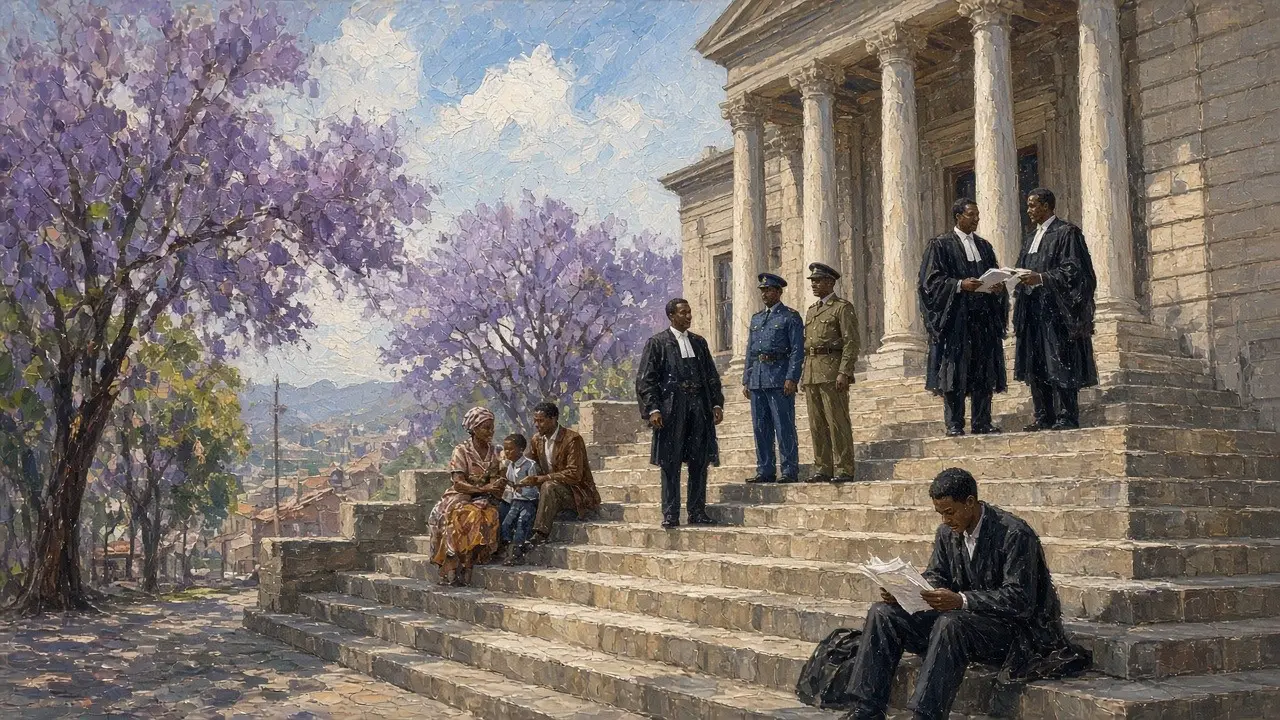
Who should decide whether the accused did it? Athens answered with ordinary citizens in large numbers: when Socrates was tried in 399 BCE, the jury had about five hundred members. England's answer grew from the sworn neighbours that medieval kings used to report local crimes. After the Church stopped its priests from taking part in trial by ordeal in 1215, English courts turned to these local juries to decide guilt. Twelve became the custom; Scotland has long used fifteen.
Countries today give three main answers. Some use a jury of ordinary citizens who decide the verdict on their own, as in England, Canada or New Zealand. Others leave the facts to professional judges, as in the Netherlands and in many Islamic courts, where a trained qadi decides. A third group mixes the two. In Germany, lay judges called Schöffen sit beside professional judges and vote with them, and in Japan six citizens, the saiban-in, join three judges in serious criminal trials.
Why bring in amateurs at all? Partly to make fairness visible. A verdict from people like the accused, with no career at stake, is hard to call the ruler's verdict. In 1670 English jurors who acquitted the Quaker William Penn were jailed for it, and the courts ruled that jurors cannot be punished for their verdict. The open courtroom serves the same aim. The philosopher Jeremy Bentham called publicity the very soul of justice, and in Botswana's kgotla, disputes have long been heard in an open assembly.
The debate is real. Defenders say ordinary people bring the community's sense of justice and a check on officials. Critics say trained judges are more consistent, can follow complex evidence, and must give written reasons, which juries do not. Both sides want fairness that can be seen; they disagree about whose eyes to trust.
The jury room
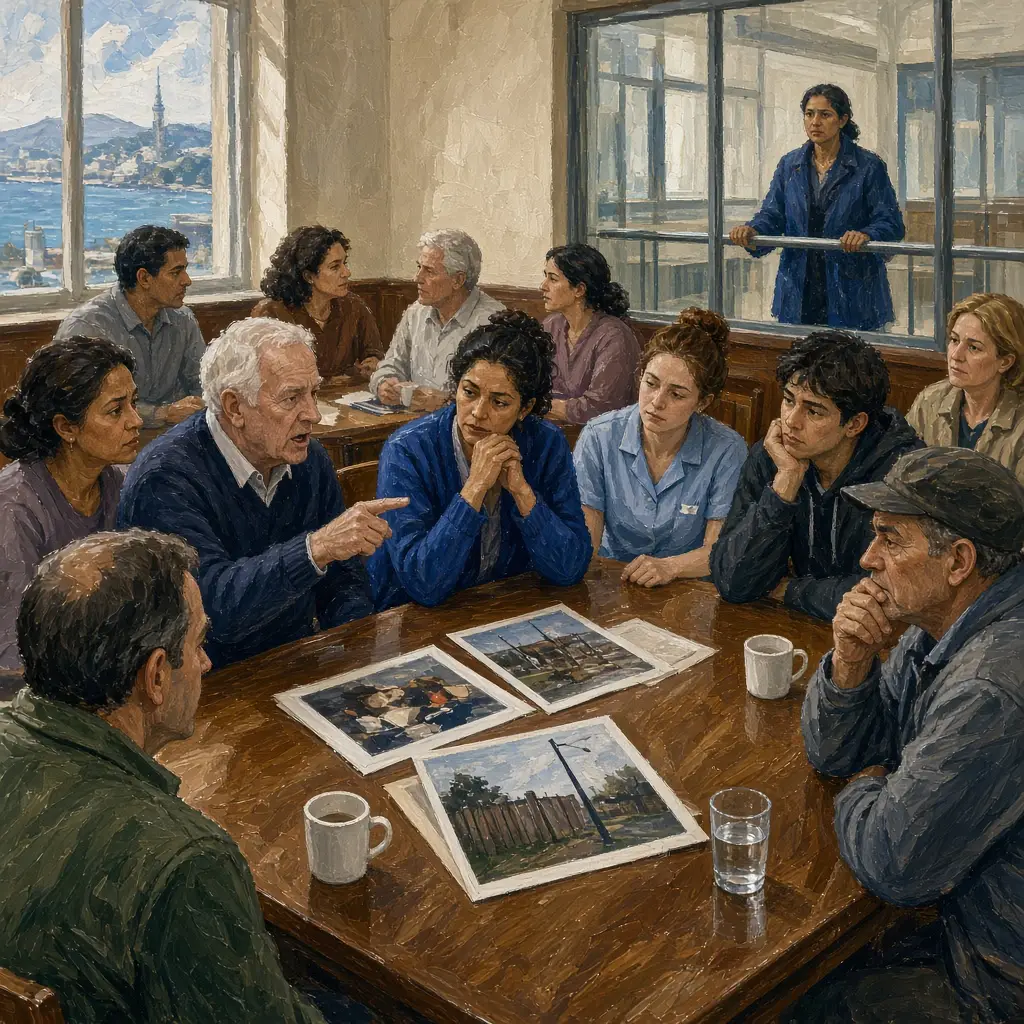
Wiremu was called for jury service in Auckland. On the first morning she sat in a row with eleven people she had never met: a retired engineer, a nurse coming off a night shift, a student, a man who ran a fish shop. The case was a burglary, and the key evidence was a neighbour who said she had seen the accused climb a fence at dusk.
In the jury room the engineer worked out from the court's own photographs that the streetlight was behind the fence, not in front of it. The nurse said she had identified the wrong patient in poor light more than once. They argued for a day and a half and found the man not guilty. As they filed out, Wiremu saw his mother in the public gallery, holding the rail. She thought the woman would not have believed a verdict handed down by an official behind a closed door, whichever way it went.
Try this today Find out whether courts where you live use juries, lay judges or professional judges alone for serious crimes.
Cite or share this lesson
A plain reference you can paste into notes or an essay:
Quest2Order. “Twelve Strangers.” https://quest2order.com/learn/lesson/twelve-strangers. Accessed 29 November 2026.
Sources
- Jury — History of the jury from Athens to modern common-law courts.
- Lay judge — Mixed benches of lay and professional judges in many countries.
- Bushel's Case — The 1670 ruling that jurors cannot be punished for their verdict.