Lesson · 6 min Gentle
Two Tables in the Courtroom
In one line A prosecutor decides whether to accuse and a defence lawyer tests the accusation; the design needs both to be strong.
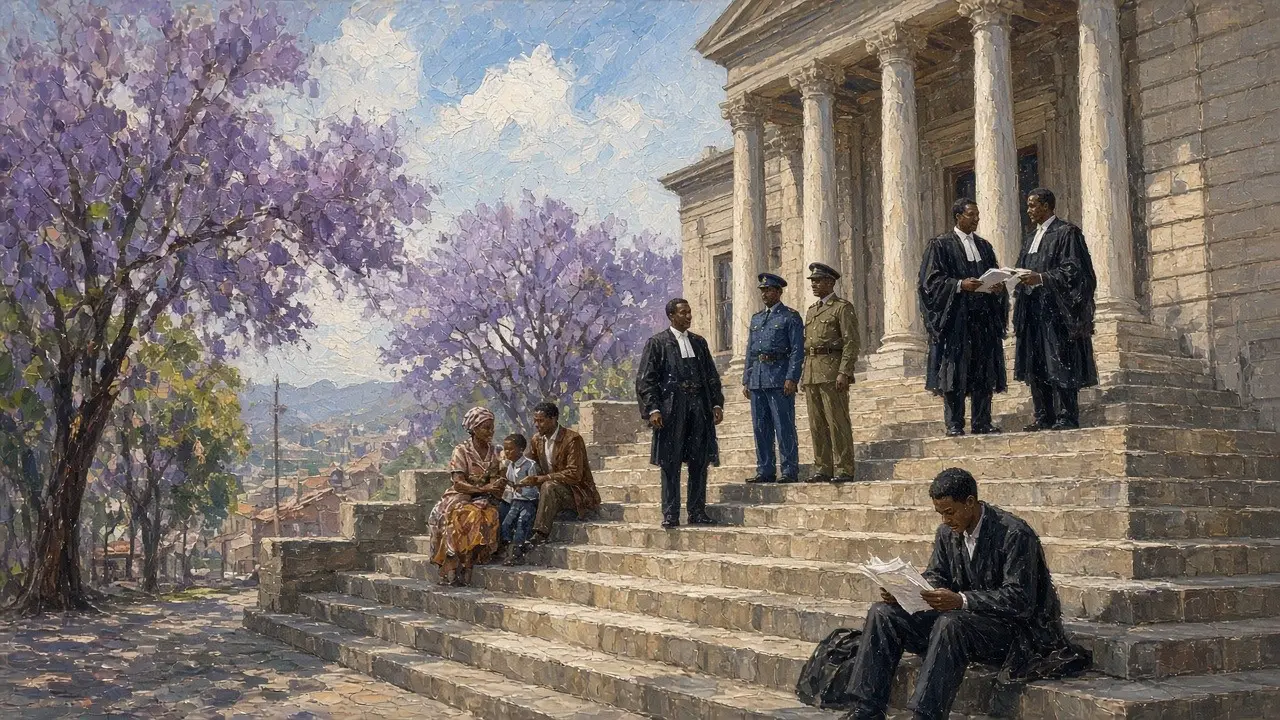
In many courtrooms two tables face the judge: the prosecutor's, who speaks for the state, and the defence lawyer's, who speaks for the accused. The state brings a criminal case on behalf of everyone, as Civil or Criminal? explained. Both tables shape a case long before any trial.
The prosecutor's first power is the charge. Germany follows a principle of legality: if the evidence is sufficient, the prosecutor is in general obliged to charge, and must also seek evidence that clears the suspect. The Netherlands, Japan and the United States follow a principle of opportunity, letting a prosecutor drop a provable case when charging would serve no public purpose. Most American counties elect their district attorney; Germany, France and Japan use career officials. Election brings answerability to voters and the risk of playing to the crowd; a career brings expertise and the risk of a closed world.
The defence lawyer tests the case, questioning the evidence and checking that the police kept the rules. Most accused people cannot pay for that. In Gideon v. Wainwright (1963) the US Supreme Court held that states must give a lawyer to a poor person facing a serious charge; Clarence Gideon, who had written his appeal in pencil from prison, was retried with one and acquitted. England and Wales provide duty solicitors at police stations, and India's constitution directs the state to offer free legal aid.
The design works only if both tables are strong. A prosecutor has police and laboratories; a public defender may carry hundreds of cases a year and meet a client for minutes. When the defence is starved, weak cases go untested. European human rights law calls the ideal equality of arms. The hard question is cost: a real defence for every poor accused person is expensive, and the public often suspects that the people it would help are guilty.
Nineteen files before ten
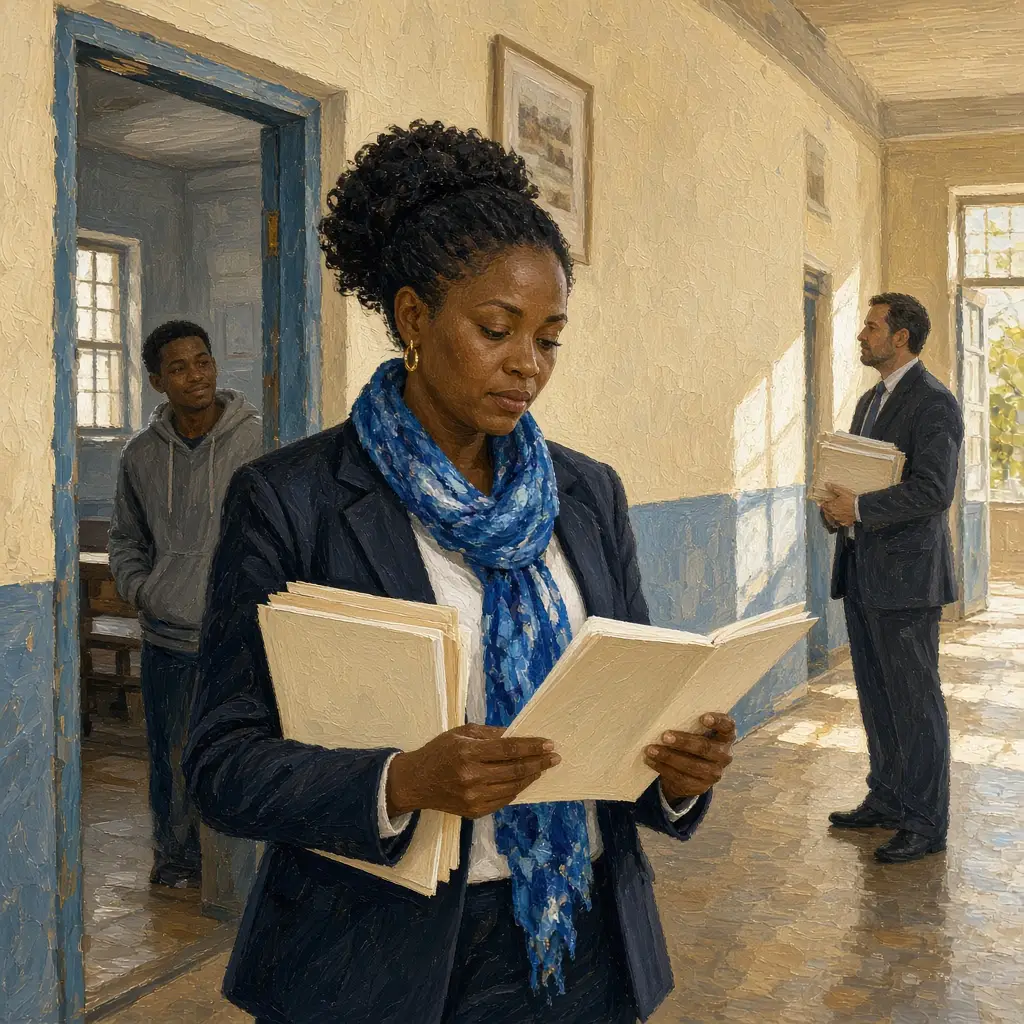
Zanele is a Legal Aid lawyer at the magistrates' court in Mitchells Plain, Cape Town. One Monday she was handed nineteen files before ten o'clock. One belonged to Lwazi, nineteen, held over the weekend for stealing a neighbour's bicycle. The prosecutor, a career official with a pile of his own, offered a quick deal: admit it, repay the neighbour and leave with a suspended sentence. Zanele had ten minutes with Lwazi in the cells. He said a stranger had sold him the bicycle for 200 rand.
She read the docket in the corridor. Nobody had seen Lwazi take the bicycle; it had simply been found in his yard. She could advise him to take the deal and clear one file from a crowded morning, or ask for a postponement to check his story. She asked for the postponement, and two other neighbours later named the man who had sold it. When she showed the prosecutor, he read the file again, decided the evidence would not prove theft, and withdrew the charge. Zanele still had eighteen files.
Try this today Find out who prosecutes crimes where you live, and whether that person is elected, appointed or a career official.
The machinery, step by step: How an arrest becomes a charge →
Cite or share this lesson
A plain reference you can paste into notes or an essay:
Quest2Order. “Two Tables in the Courtroom.” https://quest2order.com/learn/lesson/two-tables-in-the-courtroom. Accessed 29 November 2026.
Sources
- Gideon v. Wainwright — The 1963 US Supreme Court case on a lawyer for poor defendants, and Clarence Gideon's story.
- The Code for Crown Prosecutors — The evidential and public interest tests prosecutors in England and Wales apply before charging.