Lesson · 6 min Gentle
Who Enforces?
In one line Every rule needs a referee, and the referee needs rules of their own.
Yesterday we saw that groups turn to compulsion to beat the free rider. But compulsion has to be done by someone. When two neighbours disagree about a fence, each is sure they are right. If they settle it themselves, the stronger one wins, and the rule becomes whatever the strong say it is. So groups almost everywhere invent a third party: someone outside the quarrel whose job is to decide and make the decision stick. Call it the referee problem.
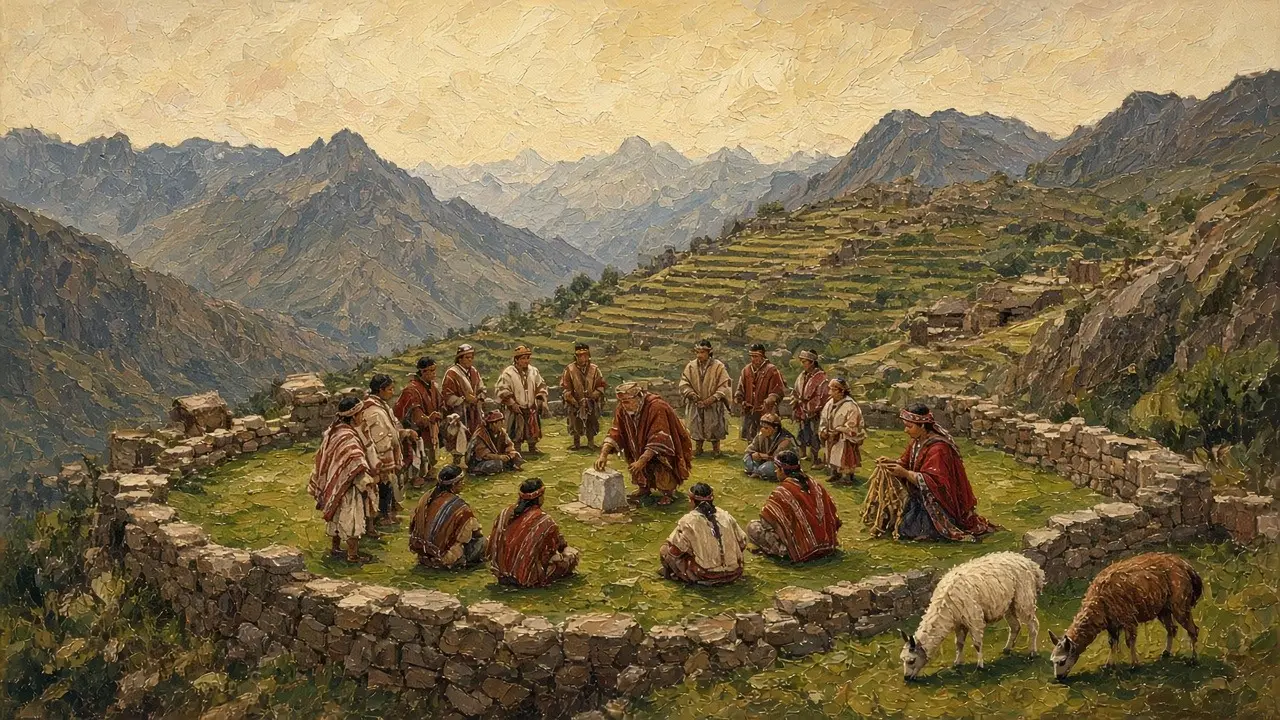
The referee has worn many faces. In a village it might be the elders, respected enough that people accept their word. Later it was a chief, a magistrate, a judge. Modern states add police to catch wrongdoers, courts to try them, and fire services to protect everyone from a danger no one person can fight. Public administration studies how these bodies are built, staffed and kept working.
The sociologist Max Weber gave the clearest modern definition of what sits at the top. A state, he said, is the human community that successfully claims the monopoly on legitimate physical force within a given territory. In plain words: in a working state, certain people may use force, in certain ways, and most people accept that this is right. Everyone else must settle disputes by appeal to them.
That is a lot of power to hand to anyone. So enforcement itself needs rules: who may arrest, what evidence counts, how long someone may be held, who checks the checkers. A referee who answers to nobody is just the strongest player with a whistle. The hardest part of building order is not making rules for citizens. It is making rules for the people who enforce them.
The fence and the elder

Two farmers in a valley in Tajikistan both claimed a strip of land where a stream had shifted course. Hamid's father owned one field; his neighbour's uncle had owned the other. For a season they argued, then one dug a channel and the other filled it in by night.
In the end they walked together to an old man named by both families, who heard each in turn and paced the ground himself. He split the strip along the old stream bed, and both men accepted it, not because they agreed, but because the whole valley would know if either refused. Hamid later became a surveyor in the district office. He says the office does the same work the old man did, with maps instead of memory, and with its own rules about who may decide.
Try this today Find out who you would call in your area for a fire, a theft and a boundary dispute, and notice how many different bodies that is.
Cite or share this lesson
A plain reference you can paste into notes or an essay:
Quest2Order. “Who Enforces?.” https://quest2order.com/learn/lesson/who-enforces. Accessed 29 November 2026.
Sources
- Max Weber, Politics as a Vocation — The lecture that defined the state by its monopoly on legitimate force.
- Monopoly on violence — Overview of Weber's concept and later debates about it.
- Public administration — How public bodies are built, staffed and run.