
Lesson · 6 min Gentle
Why Write Rights Down?
In one line A written list of rights limits power only when people and institutions are ready to defend it.
For eight centuries people have written down what power may not do. Magna Carta, met in Clause Thirty-Nine, bound an English king in 1215. After the revolution of 1688, England's Bill of Rights of 1689 barred the Crown from raising taxes or keeping an army in peacetime without Parliament, and banned excessive bail and cruel and unusual punishments. France's Declaration of the Rights of Man and of the Citizen of 1789 claimed rights for every person, and said that a society without guaranteed rights and separated powers has no constitution at all.
Why bother with a list? James Madison, who later drafted the American Bill of Rights, at first doubted it. In The Federalist he asked whether it was enough to trust 'parchment barriers' against the encroaching spirit of power, and in a letter to Thomas Jefferson in 1788 he noted that overbearing majorities had broken the states' bills of rights again and again. Jefferson replied that a list puts a legal check in the hands of judges. Madison came round, and added a reason of his own: rights solemnly declared slowly become part of how a people thinks. The first ten amendments were ratified in 1791.
After the Second World War the lists multiplied. The Universal Declaration of Human Rights of 1948 spoke for the whole world but bound no state in law. The European Convention of 1950 came with a court. Germany's Basic Law of 1949 opens by declaring human dignity inviolable, India's constitution lets citizens go straight to the Supreme Court to enforce their fundamental rights, and South Africa's post-apartheid constitution added rights to housing, health care and water.
Madison's worry has not gone away. The Soviet constitution of 1936 promised free speech and a free press while the regime filled its prison camps. A list gives people and courts something to point to; whether that is enough depends on who will enforce it.
The board by the stairs
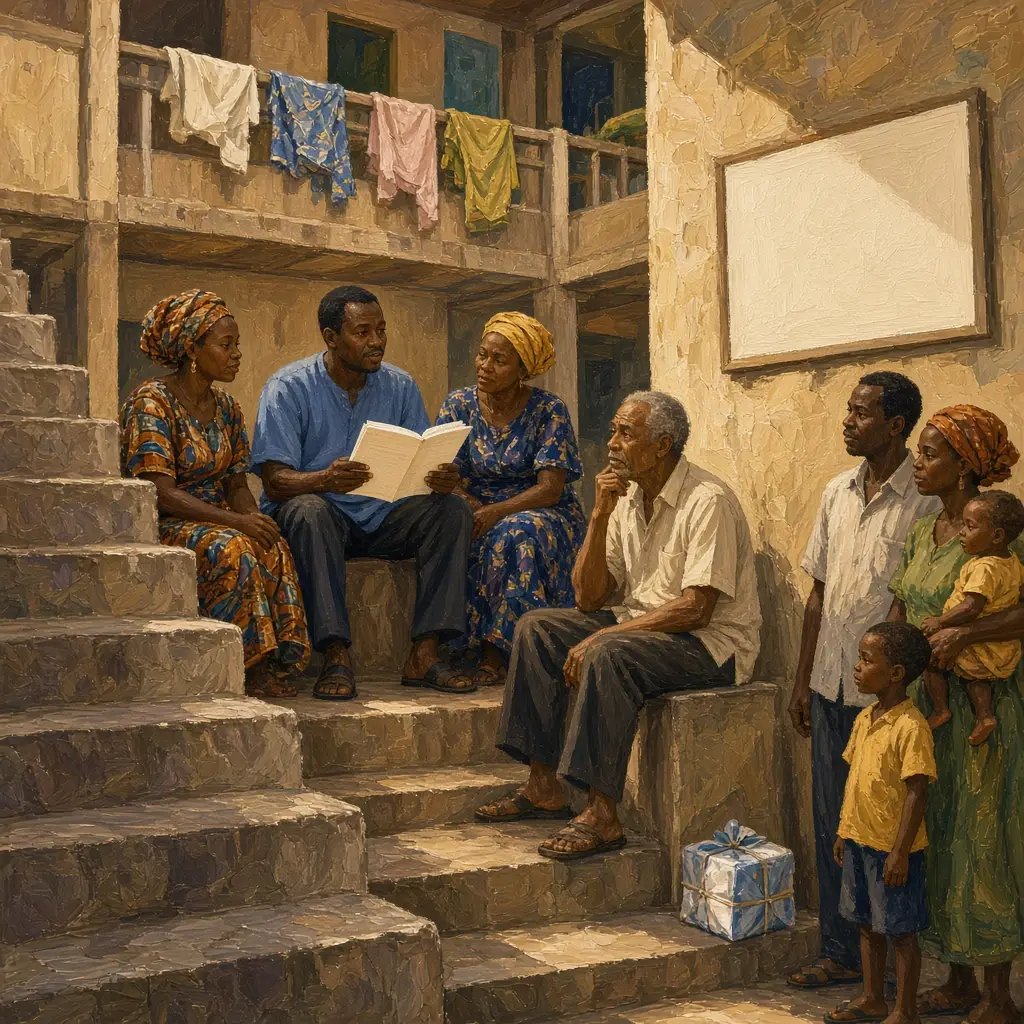
Abla chaired the new tenants' association of a block of flats in Accra. At the first meeting, members wanted the rules to open with a list: every tenant may speak at meetings, see the accounts and appeal against a fine. Kojo, who had lived there for thirty years, laughed. The old association had a list too, he said, painted on a board by the stairs, and the old chairman ignored it whenever it suited him.
Abla kept the list but added something. Any tenant who thought a right had been broken could take it to a panel of three neighbours chosen by lot, and the panel's ruling would be read out at the next meeting. In the first year the panel met twice. Once it cancelled a fine the committee had put on a family for drying washing on the balcony. Kojo admitted that the board by the stairs had never managed that.
Try this today Find the first right named in your country's constitution. If an official broke it tomorrow, where would you go?
Cite or share this lesson
A plain reference you can paste into notes or an essay:
Quest2Order. “Why Write Rights Down?.” https://quest2order.com/learn/lesson/why-write-rights-down. Accessed 29 November 2026.
Sources
- The Federalist No. 48 — Madison on 'parchment barriers' and the encroaching spirit of power.
- Bill of Rights 1689 — The text of England's Bill of Rights, on legislation.gov.uk.
- Universal Declaration of Human Rights — The full text, from the United Nations.